
Are Radians Real?
A Strange Tale of Units


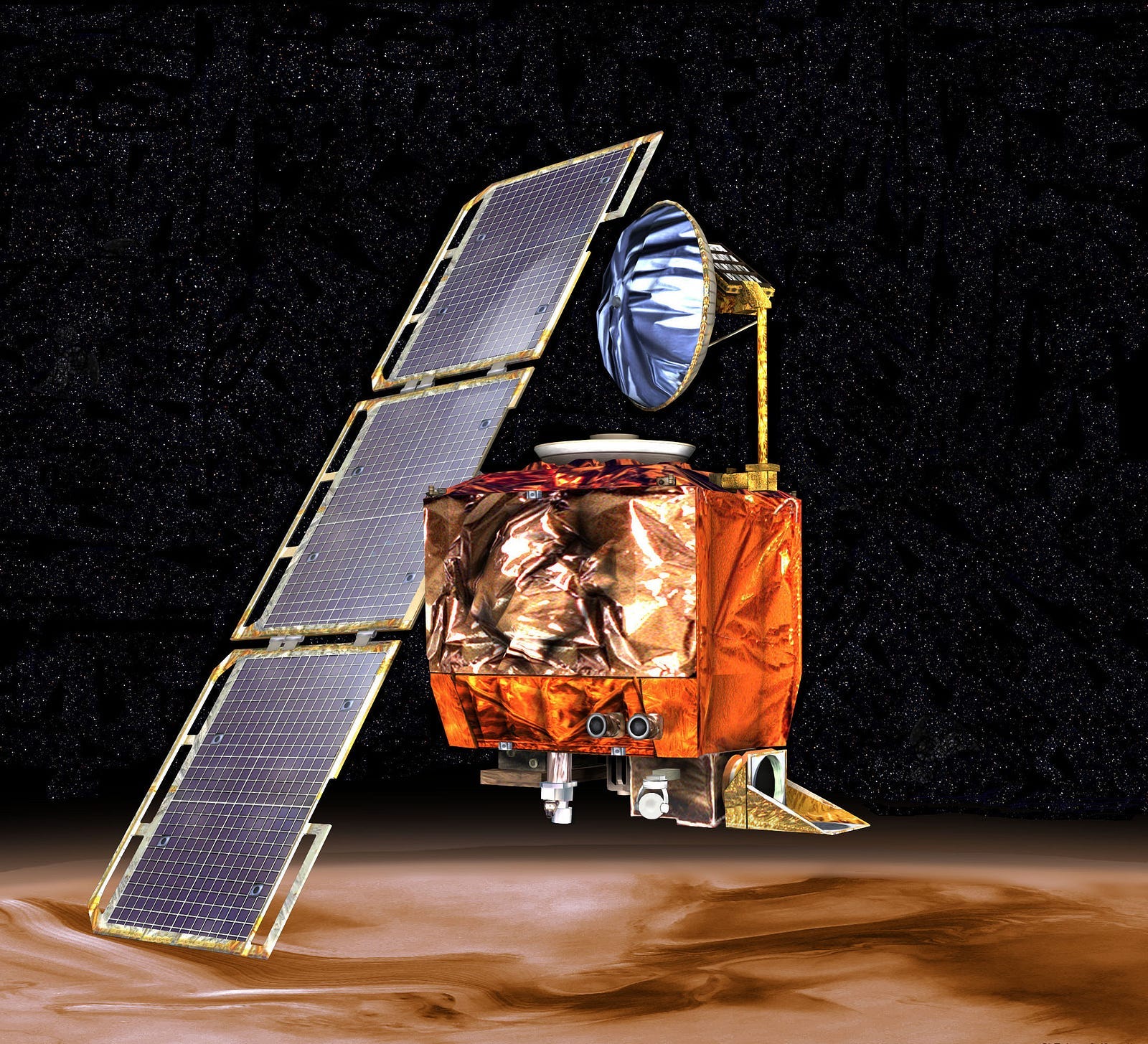
Units are critical for any scientific project. The difference between 1 milliliter of poison and 1 gallon of poison is extremely important. I was always frustrated in school when I’d lose points on my homework for forgetting to include units. But now that I’m a scientist, I see how important they are. In fact, a NASA mission to land the Mars Climate Orbiter on Mars failed due to a mistake in unit conversions.
The units used by scientists are dictated by the International Bureau of Weights and Measures located in Saint-Cloud, France. They maintain a standard system of units, SI units, that are supposed to be used around the world. This organization is absolutely fascinating. They are responsible for handling units used by all disciplines of science everywhere! This is an immense reponsibility and lots of cool science happsn here. They used to have physical objects that served as the official meter and the official kilogram.
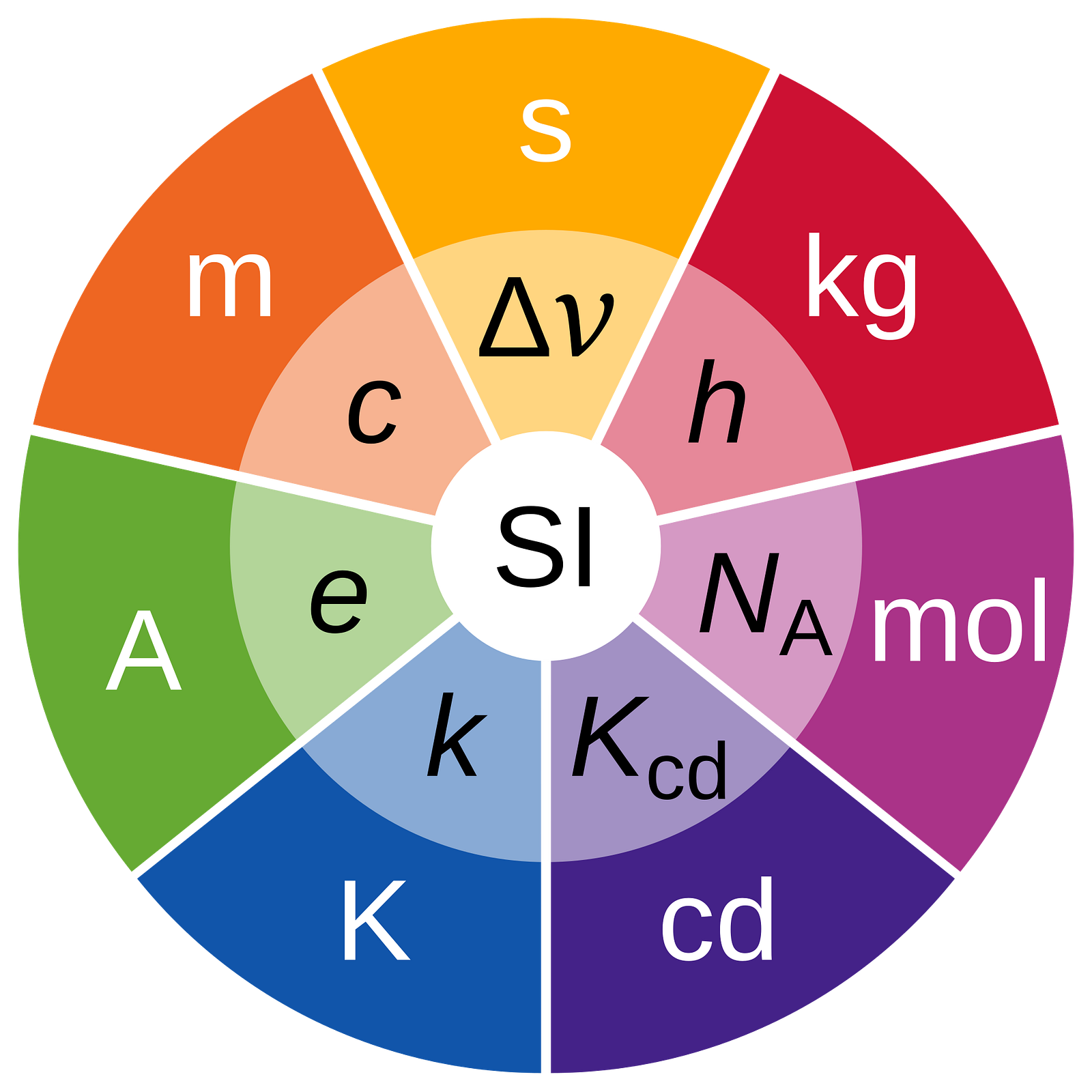
The entirety of SI consists of just 7 different types of units. This includes the meter, second, kilogram, mole, candela, Kelvin, and ampere. I had to look up what the candela is; it’s a measure of the luminous intensity given off by a light. Every single standard unit can be calculated using the main ones. The inner symbols refer to physical constants associated with each of the units.
In the modern era, these unit definitions have become much more technical and consistent. For example, a meter is now defined as the distance light travels in 1/299792458 of a second. A second is defined as the frequency standard for photon absorption in a transition between the two ground states of caesium-133 atoms, which serves as the basis for extremely accurate atomic clocks. We use this type of measurement because there was a noticeable drift in the physically measured standards. Any physical object will naturally shift in its mass over time.
The system underwent a massive change in 2019, when all the units were defined in terms of physical constants. The second is now considered to be the most fundamental of the SI units, since it is used in the calculation of the others, except for the mole.
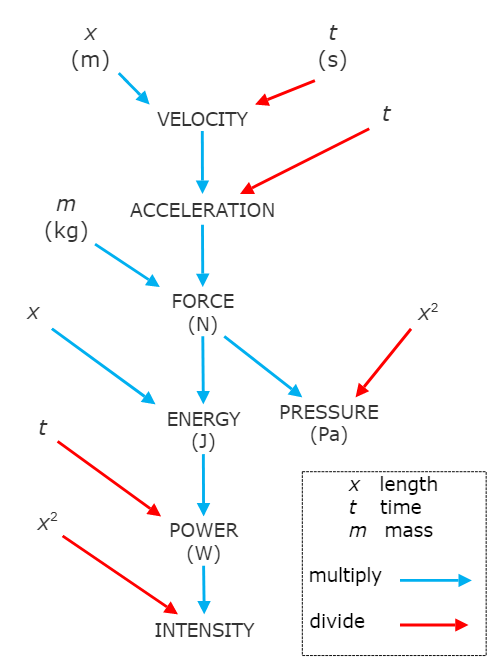
Most units we use in science are considered to be “derived,” meaning they come from combinations of other units. Hertz are just inverse seconds, Newtons are kilogram-meters divided by seconds squared, etc.
If I go to the Wikipedia page for Standard Units, I get a nice set of equations describing how to calculate each one using only the standard seven. There are some I’ve never even heard of on here, like a gray or a katal. It’s really interesting to me to see how each unit is derived from the others. I recommend you take some time to look through this list and see all the cool units out there!
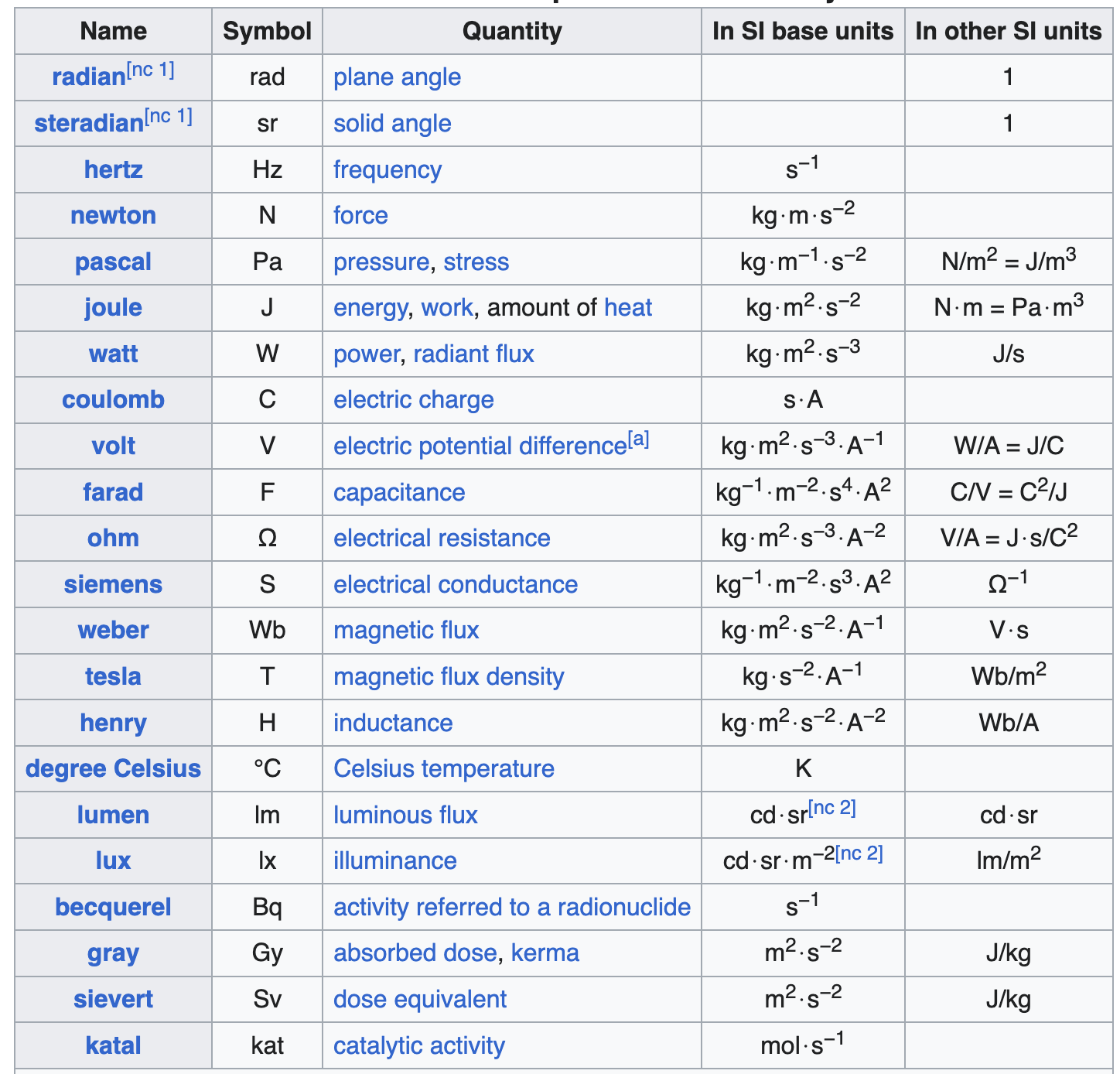
However, both the radian and the steradian stand out. There is no equation given for how to calculate them, and they are both just listed as “1.” What does that mean? In SI terms, we say they are dimensionless. To understand this, we have to revisit what a radian actually is.
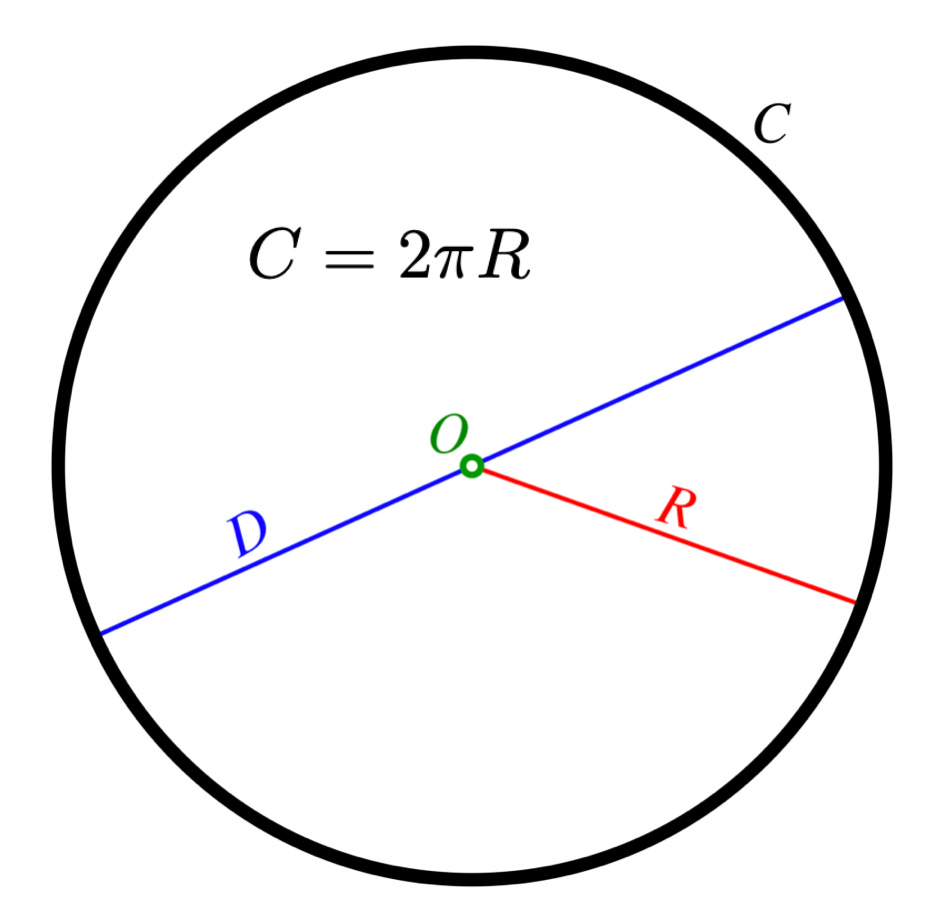
One of the most fundamental equations in geometry relates the radius of a circle to its circumference. This equation goes all the way back to the ancient Greeks, who mastered basic geometry. We can use the equation to approximate values of π, and it is common in all sorts of engineering and physics problems.
Let’s ask another question: what if I wanted to calculate the circumference of half this circle? Then I would use C = πR. If I want to find the circumference of a quarter of this circle, then I would use C = πR/2. I can generalize this and say that if I want to calculate the circumference of any fraction F of the circle, then I can do so with the equation.
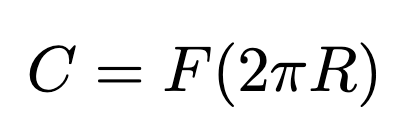
To revisit our original topic of units, both C and R have units of length. In SI units, this would be meters. But the F and the 2π are unitless. We can use this equation to make an even more useful form.
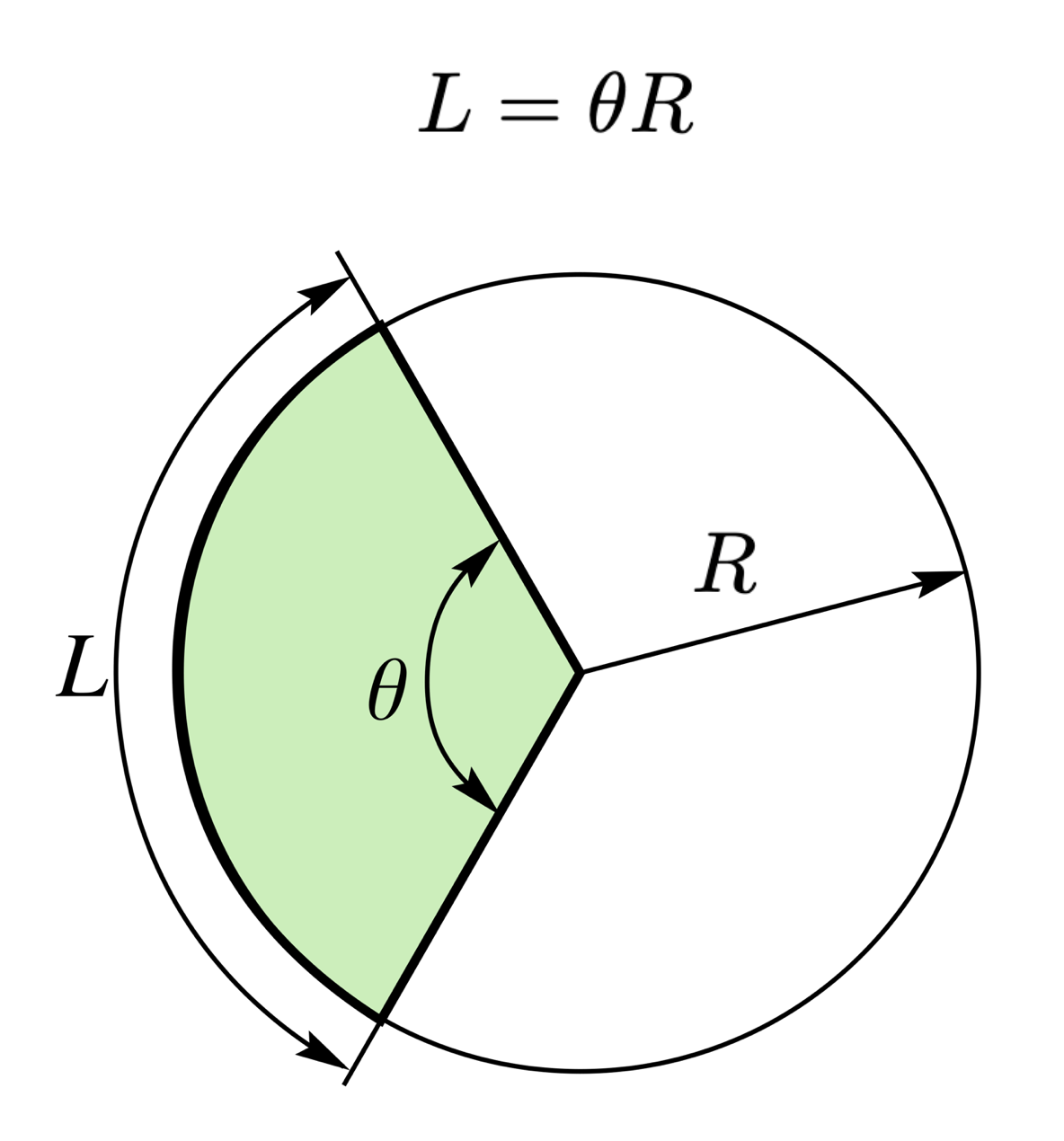
We define θ as the angle of the arc we are trying to measure. You’ve probably seen an equation like this before, defined as “arc length.” For this to work, we have to use very special units. When θ covers the entire circle, it must be 2π by the equation we had above. Similarly, θ = π when it only covers half of the circle. We define this new unit system for an angle as radians. Notice that L and R are both units of length, which means that θ must be unitless to make the units work out. We only label it as radians for convenience.
The leap from 2π to angles is a bit of an odd one, but it makes calculations significantly easier once you get used to it. This concept was introduced by the Persian mathematician Jamshid al-Kashi in the 15th century. Leonhard Euler standardized it into its form we know today, solidifying the relationship between arc length and angles. The name “radian” came after, and was likely invented by James Thomson, brother of Lord Kelvin.

This relationship is extremely useful; it is amazing that we can relate an angle, radius, and circular arc length like this. It only works because of the fundamental definition of circumference. However, it means that radians are a fairly unintuitive unit. When I used to help teach physics labs, this was always a source of confusion for our students. It was strange that we label a quantity with a unit and can just drop it whenever we please.
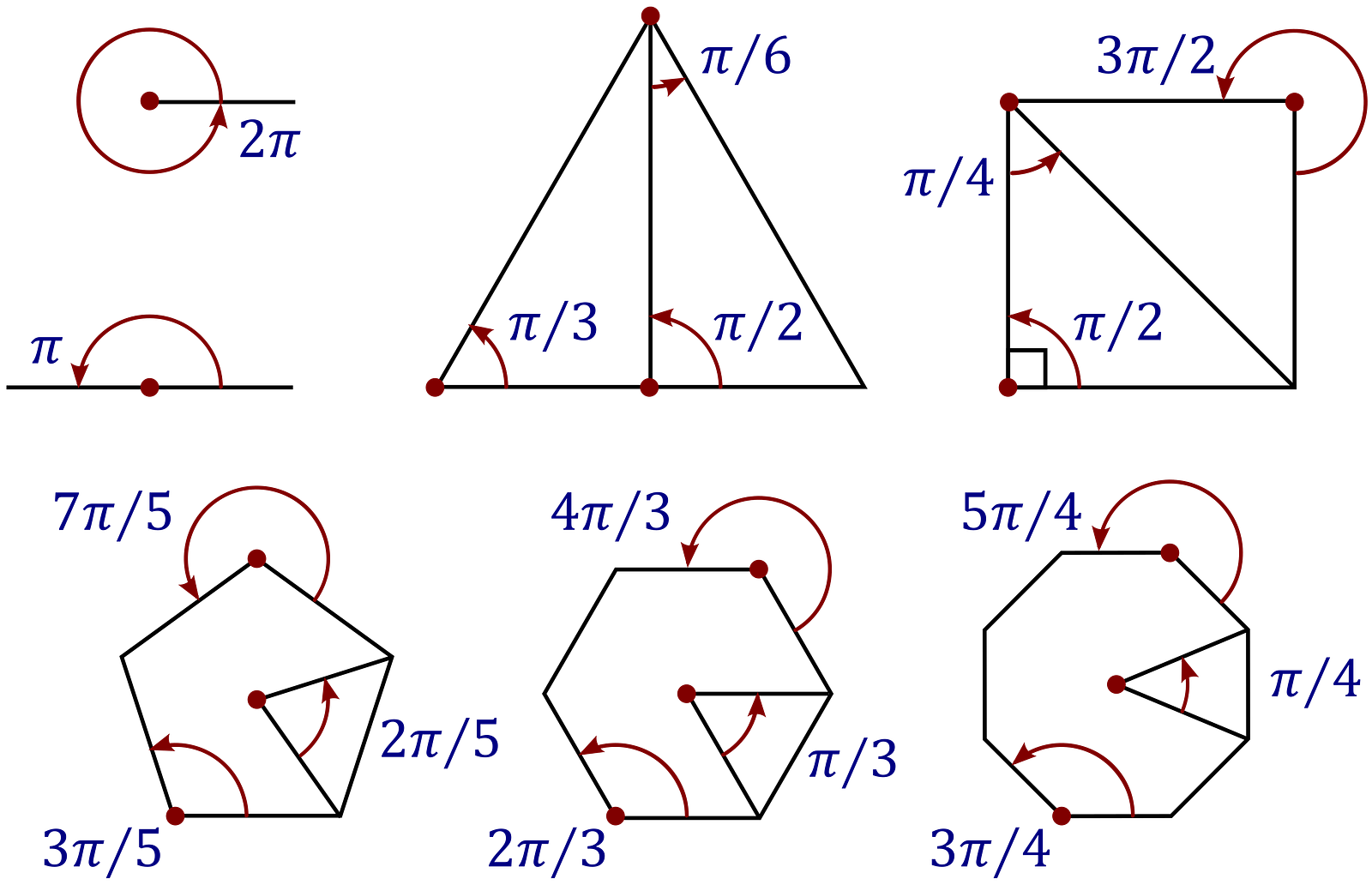
There is some debate about whether this is really the best way to go about this. I always found it a bit strange that one turn around the circle is represented by 2π. There is a movement to switch to 𝝉 = 2π, which does simplify the equations a bit and is arguably more intuitive. This means one full rotation would be the standard unit of radians, rather than half a rotation. If you are interested in this discussion, I have some links at the end of this article.
Similar to radians is another SI unit known as steradians (sr). These are the analogs for measuring the angle of a sphere, and are also dimensionless. An entire sphere has a surface area of 4π sr, or about 12.5 sr. I used these steradians often in my course on atmospheric radiation.
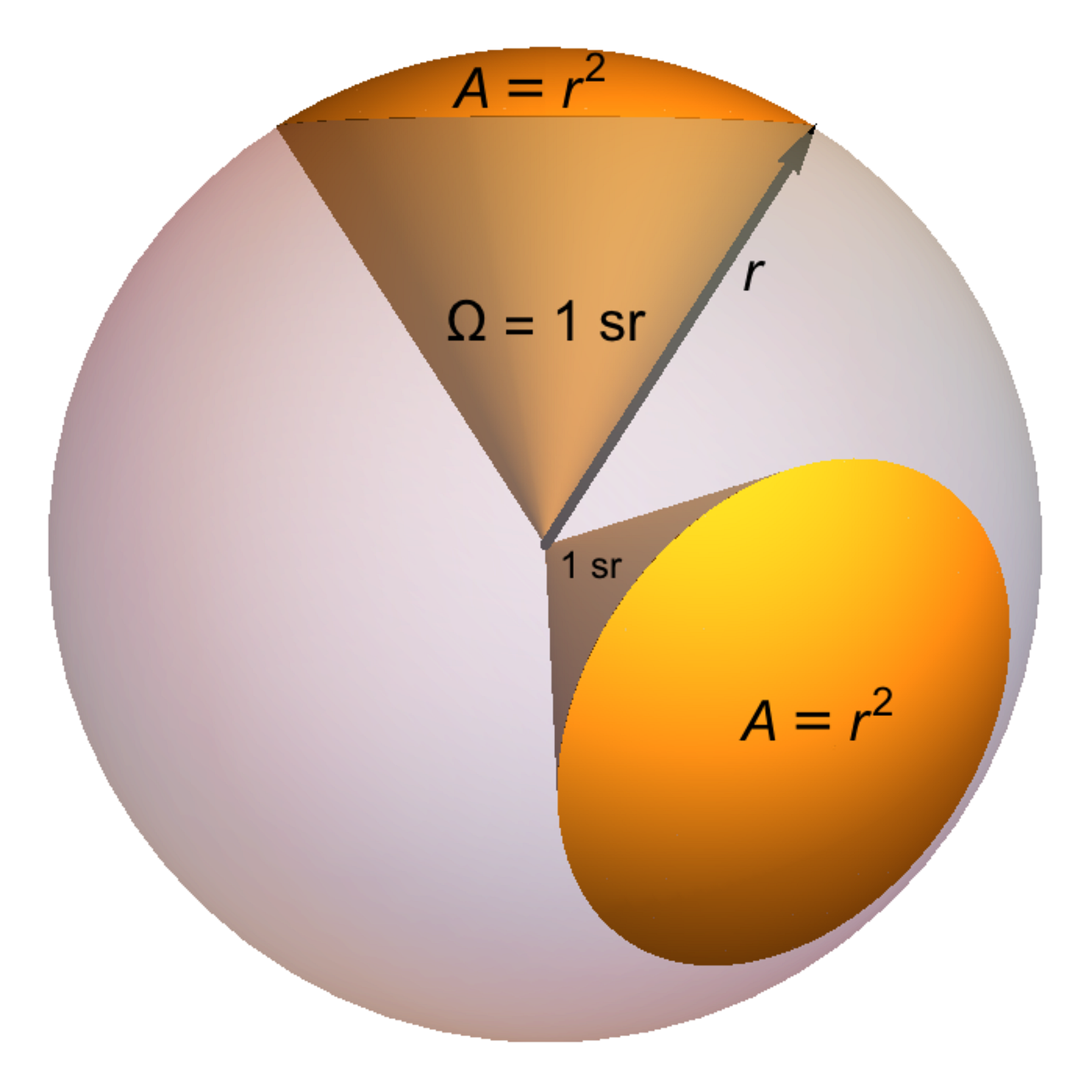
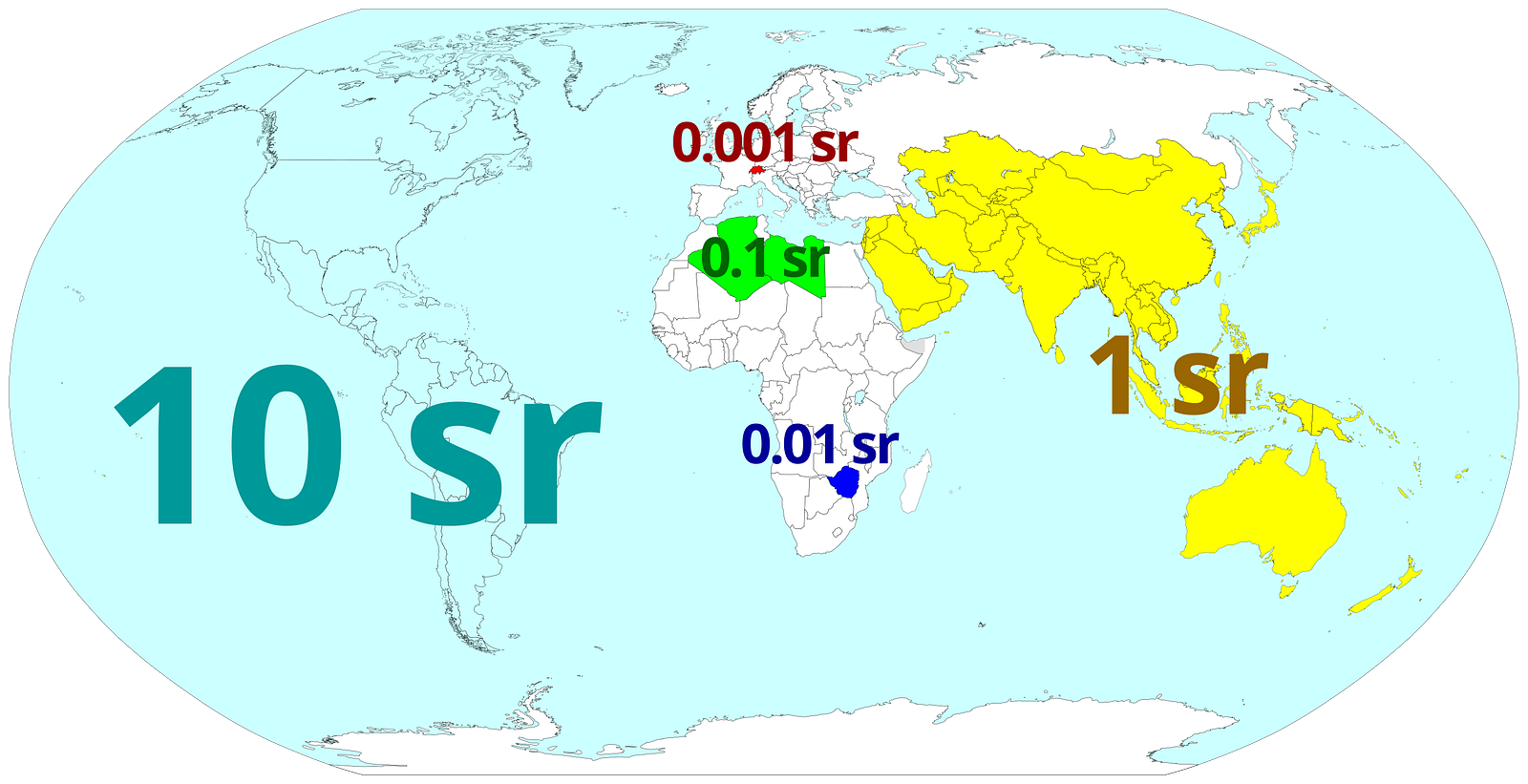
We can define spaces on Earth in terms of how many steradians they encompass, like in the example below
In the world of units, radians and steradians are a bit of an oddity. Instead of being tied to a physical quantity, they emerge from a fundamental mathematical relationship. Their existence allows us to perform a remarkably useful calculation relating arc length, radius, and angle. Since they are dimensionless, we can drop them from any calculation to make the units work out. While they are a bit odd, they are certainly real and incredibly useful!
Going Further
I hope you learned something! If you want to learn more about this topic, I’ve included some links below for you to check out.
This website contains a massive list of arguments for switching from Pi to Tau. It’s a fascinating read, even if you don’t agree with it.
The history of unit definitions is much more complicated than you might think. This book has a really cool history of defining the meter, and all the weird politics and obstacles in the way.